Native token onboarding for L1s, L2s, and appchains, in one click.
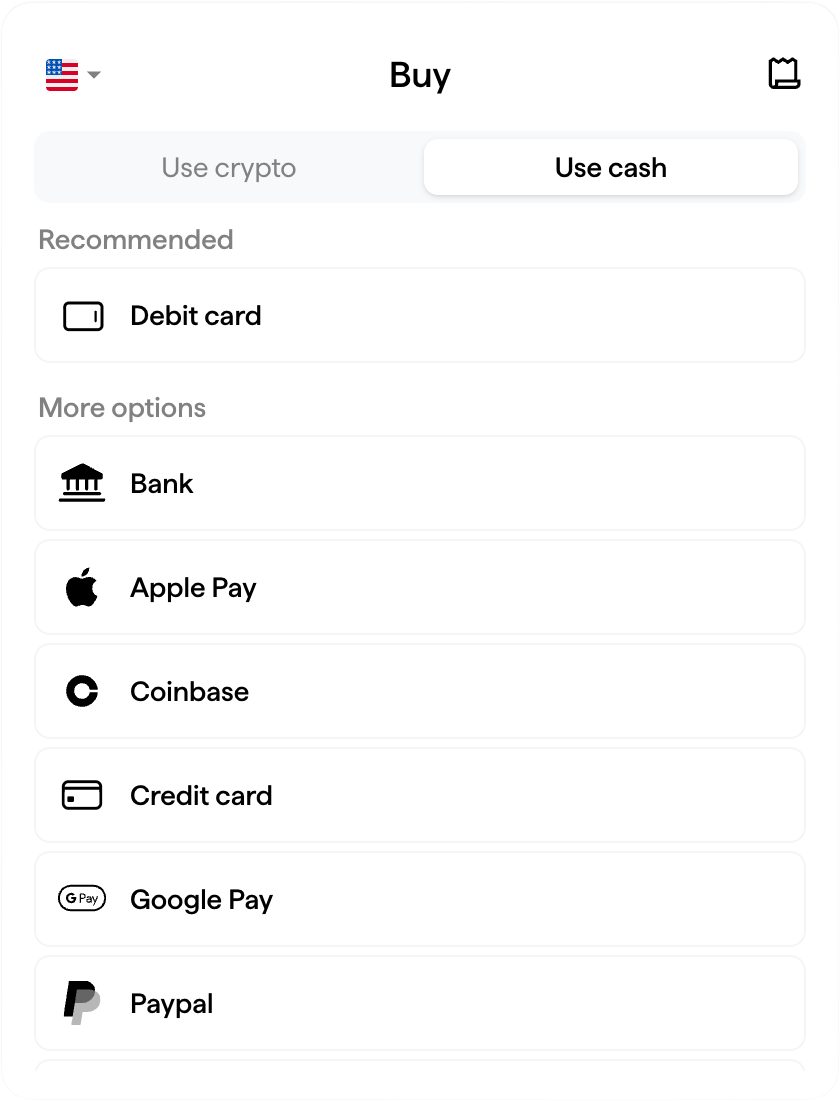
Users buy a native token with a card, an exchange balance, or assets on any other chain, in one step. Every team in a chain ecosystem can deploy the same widget.




50+ chains supported today
Deposits to your chain, funded from any chain. Users bring assets from more than 50 networks across EVM, Solana, Tron, and Bitcoin through one SDK integration.
See all supported chains ↗Every way a user can get your token, in one flow.
Halliday quotes the available paths and sorts them by highest output and lowest latency.
Users buy your native token directly with debit and credit cards, bank transfers, Apple Pay, and Google Pay. Halliday onramps to a liquid asset and swaps into your token automatically.
Users pay from a Coinbase, Binance, or other centralized exchange balance, even if the exchange does not list your token or chain. Halliday bridges and swaps the rest of the way.
ETH, USDC, or other tokens held on another network are bridged into your chain and swapped into your token in one confirmation.
Once your token is supported, any app building on your chain can drop in the same widget and offer the same deposit experience.
How onboarding to your chain works
- 01Halliday adds your chain and token
You provide chain ID, RPC and explorer details, bridge contracts, and liquidity sources. Support is typically live in hours or days.
- 02Apps embed the widget
Your team and ecosystem builders mount the Halliday widget with a few lines of code. Users see every funding path in one place, inside the app.
- 03Users land on your chain with your token
Onramp, bridge, and swap steps run automatically after one confirmation. Funds arrive at the user's wallet or the app's destination address.
One integration for your whole ecosystem.
The SDK widget is a complete deposit and withdrawal UI that your team and every app on your chain can embed on web and in mobile webviews. The headless API is for ecosystem apps building their own onboarding.
- 01Share your chain details
Chain name and ID, supported bridges and their contract addresses, block explorer, RPC endpoint, block confirmation time, and signature type for non-EVM chains.
- 02Share your token details
Contract address, symbol, liquidity sources such as DEX pools or mint contracts, price source and icon.
- 03Create an account and get an API key
Sign up at dashboard.halliday.xyz. Get a free API key instantly. Ecosystem teams can each get their own in the dashboard.
- 04Drop in the widget or call the API
The JavaScript SDK mounts the widget in a container element with a few lines of code. Or use the REST API to quote, create, and track payments behind a custom UI.
- 05Go live across the ecosystem
New onramps, exchanges, and platforms added to Halliday's routing network connect to your token automatically, with no further integration work.
Deposits for L1s, L2s, and appchains, answered.
More details in the Halliday documentation.
Which chains has Halliday onboarded?
Halliday has worked with DATA (formerly Story), ApeChain, and MegaETH, among others, to provide onboarding for both developers and users. Halliday supports EVM and non-EVM networks.
Read the DATA case studyHow long does it take to add a new chain to Halliday?
Typically hours or days. Halliday needs the chain name and ID, supported bridges and contract addresses, block explorer and RPC details, approximate block confirmation time, and signature type information for non-EVM chains.
What does Halliday need to support our native token?
The token contract address, symbol, chain, specific liquidity sources such as DEX pool or mint contract addresses, an icon, and applicable bridge contracts if cross-chain routing is required.
Does Halliday support withdrawals from apps on our chain?
Yes. Users can move all or part of a balance from an app on your chain to their own wallet, to a centralized exchange deposit address, or offramp to fiat. For example, a user can move the native token to an exchange or offramp to fiat, with any swap or bridge handled in the widget. Withdrawals can be sourced from a smart contract wallet, embedded wallet, smart account, or EOA.
Can users cash out our native token to fiat?
Yes. Users can offramp a balance to a bank account through supported offramp providers. Payout methods and availability depend on the user's location and the provider.
Can users buy our token with a card if no onramp lists it?
Yes. Halliday onramps to a liquid asset such as USDC through global providers, then bridges and swaps into your token automatically. The user sees one purchase.
Can users fund from an exchange that does not support our chain?
Yes. Any centralized exchange that can send major tokens such as USDC to an external address works. The withdrawal can land on a different chain, and Halliday's routing network handles the interim bridging and swapping to your chain.
Can other apps in our ecosystem use the same integration?
Yes. Once your chain and token are supported, any team building on your chain can embed the Halliday widget or API and offer the same deposit experience, as MegaETH ecosystem teams do today.
Do we need to re-integrate when new onramps or providers appear?
No. New onramps, exchanges, and FinTech platforms added to Halliday's routing network become available to your token automatically. Halliday manages those provider relationships under one agreement.
Is Halliday custodial?
No. Each deposit starts at a deposit address controlled only by the owner address specified in the API call, so neither Halliday nor your team takes custody of user funds. If a payment stalls, the owner can recover or retry it.
Read the docs